the art of everesting
Magnus Kulset, the former Uno-X rider from Norway, just completed 8,848 metres of elevation gain in 4 hours and 53 minutes. A masterclass in endurance that deserves far more attention.
He averaged 325 watts across 35 efforts of 7 minutes and achieved a Zwift VAM of 1,900 m/h, all while pushing 5.25 W/kg in a relentless grind on the pedals.
When I asked him how it felt, he was open about one thing: physical fatigue was the hardest part.
Many cyclists can produce 5.25 W/kg for seven minutes. But sustaining that effort repeatedly, without a significant decline in performance, is an art. One that requires thousands of hours of training over many years.
But where did Everesting actually begin?
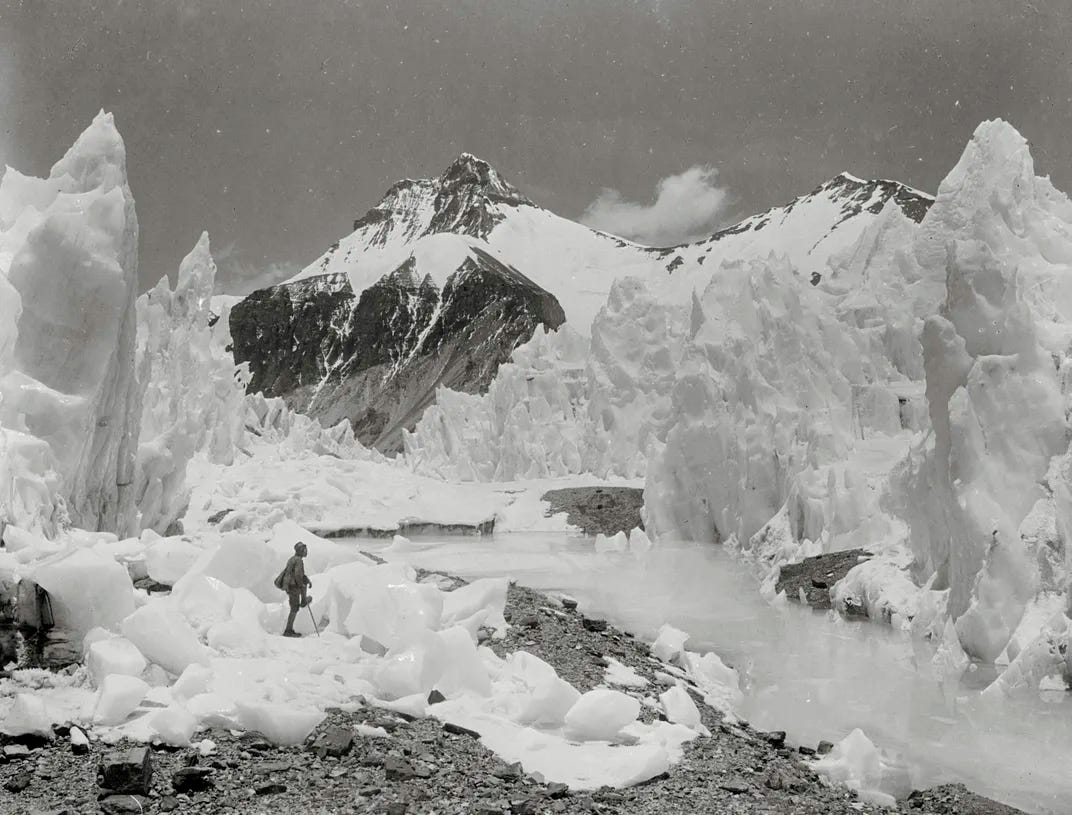
The story goes back to George Mallory, one of the first mountaineers to attempt to climb Mount Everest.
In 1924, after two failed attempts, George Mallory and Andrew Irvine set out from Camp VI, nearly 8,000 metres above sea level, early on the morning of June 8.Another expedition member, Noel Odell, later reported seeing the two climbers through a break in the clouds, high on the mountain’s northeast ridge and apparently making progress towards the summit.
Neither man ever returned. Whether they reached the summit before dying on the descent remains one of mountaineering’s greatest mysteries.
In 1994, in honour of his grandfather, George Mallory II climbed Mount Donna Buang in Australia eight times on his bicycle.
And so, the concept of Everesting was born.
The challenge grew in popularity, particularly during the COVID years. Big names such as Phil Gaimon and Alberto Contador took on the challenge, pushing the record down to around 7 hours and 20 minutes. Eventually, an Irish rider, Ronan Mc Laughlin, set a new outdoor record of 6 hours and 40 minutes.
I believe Everesting can be an incredible challenge for a well-trained athlete. It provides a substantial endurance stimulus, often at a higher power output than you would typically sustain during a flat ride.
It challenges your ability to produce torque, maintain muscular endurance and, perhaps most importantly, push through mentally when fatigue starts to take over.
So, if you’re still on the fence about attempting an Everesting, consider reflecting on George Mallory’s answer when he was asked why he wanted to climb Mount Everest, despite two failed attempts and the enormous risks involved.
He simply answered:
“Because it’s there.”